
When Senior Vehicle Inspector, Marcus King, traveled to Jamaica, the mission was part interview, part immersion, and part inspiration. Marcus sat down with Patrick Marzouca, founder of Excel Motors, to document the remarkable story behind Jamaica’s only locally built production vehicle—the Island Cruiser. Beyond the conversation, Marcus drove the Cruiser through Savanna-la-Mar, experienced it on real Jamaican roads, and left with a bold aspiration: to one day help reproduce and revive the Island Cruiser for a modern era.
A Car Born from Economic Necessity and National Pride
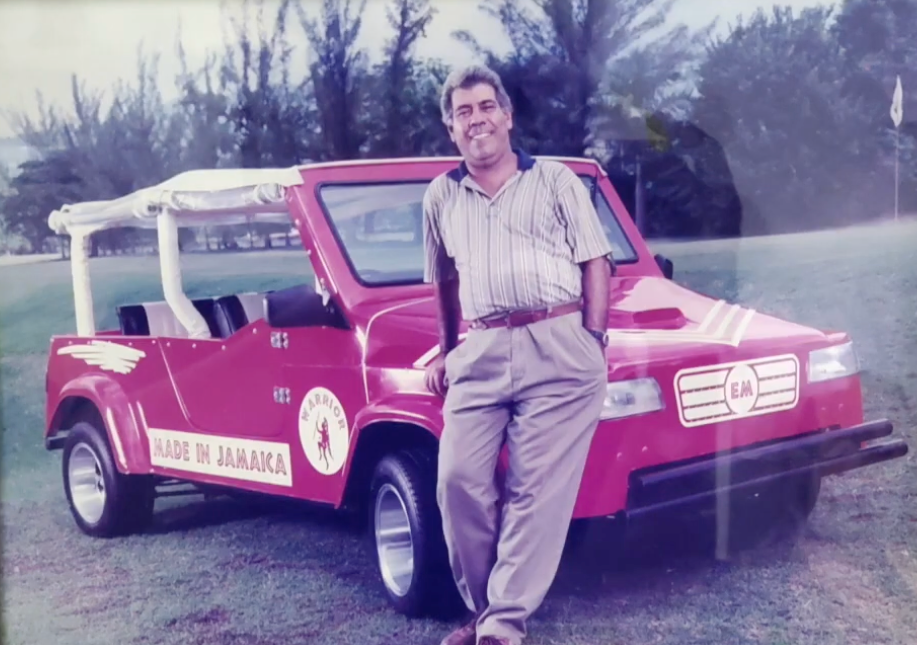
Excel Motors was founded in 1996 in Savanna-la-Mar, Jamaica, not as a vanity project, but as a response to a deeper national problem. As Patrick Marzouca explains in the interview, Jamaica’s manufacturing sector had been effectively dismantled in the 1990s, leaving the country dependent on imports and stripped of skilled industrial jobs.
Marzouca’s motivation was clear and unapologetic: Jamaica needed investment, and Jamaicans needed work.
He recognized that nearly every vehicle on the island was designed for foreign roads, foreign fuel, and foreign conditions. Suspensions failed early, engines suffered, and long-term durability was compromised. The Island Cruiser was conceived to fix that problem—to be a vehicle built specifically for Jamaican roads, fuel quality, climate, and use cases.
Engineering the Island Cruiser: Simple, Strong, and Purpose-Built
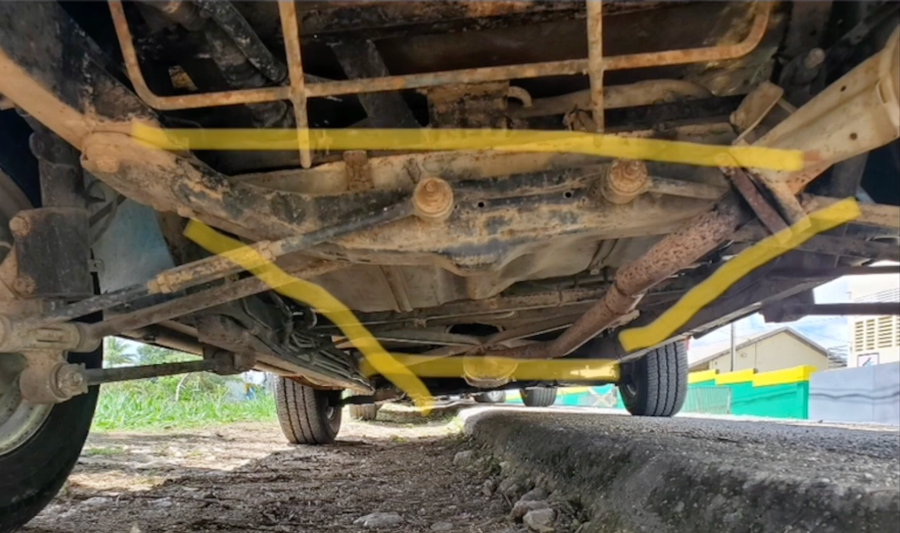
The Island Cruiser’s engineering philosophy was intentional simplicity backed by smart design. At its core was a ladder-frame steel chassis, strong enough, as Marzouca put it, “you could put a tank on it.” The suspension system—Toyota-derived but heavily modified—featured four-wheel independent struts with adjustable coil springs, a setup virtually unheard of for a small, locally built vehicle at the time.
During early testing, the prototype surprised even its creators. On Jamaican roads, it reached speeds over 120 mph, forcing the team to redesign elements like the windshield rake to improve aerodynamics and stability. Final production models were still capable of exceeding 110 mph, with specialty variants reaching higher speeds.
Power came from Toyota 5A-FE fuel-injected engines, remanufactured to factory specifications, paired with automatic or five-speed manual transmissions. Disc brakes up front, drums in the rear, and a fully structural roll cage pinned directly to the chassis made the Cruiser not just fun—but exceptionally safe.
In fact, across more than 400 vehicles produced, Marzouca states plainly:
There was never a single fatality in an Island Cruiser.
Built to Last, and to Be Rebuilt
One of the Island Cruiser’s most forward-thinking concepts was its lifecycle design. Unlike disposable modern vehicles, the Cruiser was engineered to be renewed. After years of use, owners could bring the vehicle back to be refitted with a new engine, suspension, and refreshed body—returning it to the road at roughly half the cost of a new car.
This model proved successful in rental fleets and commercial use, especially in tourism-heavy regions. Fiberglass body panels resisted corrosion, the treated chassis resisted rot, and the mechanical simplicity made repairs easy—even in roadside workshops.
One story from the interview captures this perfectly: after a front-end accident damaged the radiator, a local mechanic repaired the vehicle on the spot, and it continued its journey to Kingston the same day.
Jamaican Manufacturing at Its Peak
At full production, Excel Motors employed 110 people, each trained for a specific role in a fully manual, trolley-based production line. Everything—from chassis fabrication to interior installation—was done locally. The Island Cruiser achieved a staggering 68.5% local value-added, an unprecedented figure for any Jamaican-made product at the time.
Parts sourcing blended global quality with local assembly:
• Lighting components from Michigan
• Jeep-sourced taillights
• European fasteners and fittings
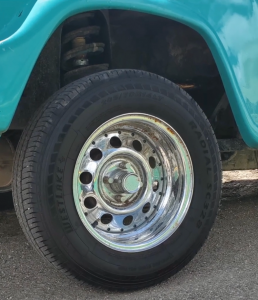
• Wheels custom-manufactured in the United States

Every vehicle carried a subtle tribute to one of Excel Motors’ greatest allies: the serial numbers began with “HF”, honoring Hans Fleischer, a German automotive expert whose guidance helped refine the Cruiser’s engineering and production standards.
Export Success—and Financial Betrayal
Despite skepticism, the Island Cruiser succeeded internationally. Vehicles were exported to the Bahamas, Turks & Caicos, and Barbados, and additional orders were lined up for Panama and South America. Yet, according to Marzouca, the company’s downfall was not lack of demand—but lack of financing.
Foreign-controlled banks repeatedly refused to fund material purchases and development, even when confirmed export orders existed. In one devastating instance, Marzouca lost over $5.5 million USD out of pocket when financing collapsed mid-deal. The company survived longer than expected—but eventually, the financial pressure became insurmountable.
Exceeding Expectations
Driving the Island Cruiser through Savanna-la-Mar, Marcus King immediately felt what Marzouca had described.
The ride was rugged yet smooth, with tight steering, minimal body roll, and impressive composure over uneven roads. The Cruiser climbed hills without downshifting, handled corners flat and stable, and felt equally comfortable in traffic or on open stretches.
Marcus notes the visibility, cabin space, and sense of structural solidity, qualities that made it clear this vehicle wasn’t just nostalgic; it was genuinely well engineered.
His verdict was simple:
The Island Cruiser exceeded expectations.

Not Just History—A Blueprint for the Future
Although Excel Motors ceased production, the Island Cruiser never truly disappeared. Many still operate across Jamaica today, some even converted to propane fuel, running reliably after decades of use.
For Marcus King and Carmigo, this isn’t just a historical footnote—it’s a blueprint. The Island Cruiser proves that small-scale, purpose-built manufacturing can succeed when design, culture, and real-world needs align. With renewed global interest in durable, character-driven vehicles, the Cruiser’s story feels less like an ending—and more like a pause.
As Marcus hints at the close of the interview:
Excel Motors may not be finished history yet.
Marcus is now restoring an authentic Island Cruiser he traveled to Jamaica to acquire. With a clear vision for the future, he plans to pursue investors to help reproduce the vehicle and carry its story forward.
